
The Science of Strength: What Research Shows About Exercise and Aging at Home
Building strength at home begins with choosing the right exercises. Strength and balance help older adults stay independent, lower the risk of falls, and keep up with daily tasks. Here’s what research says, which exercises help most, and how families can support safety at home.
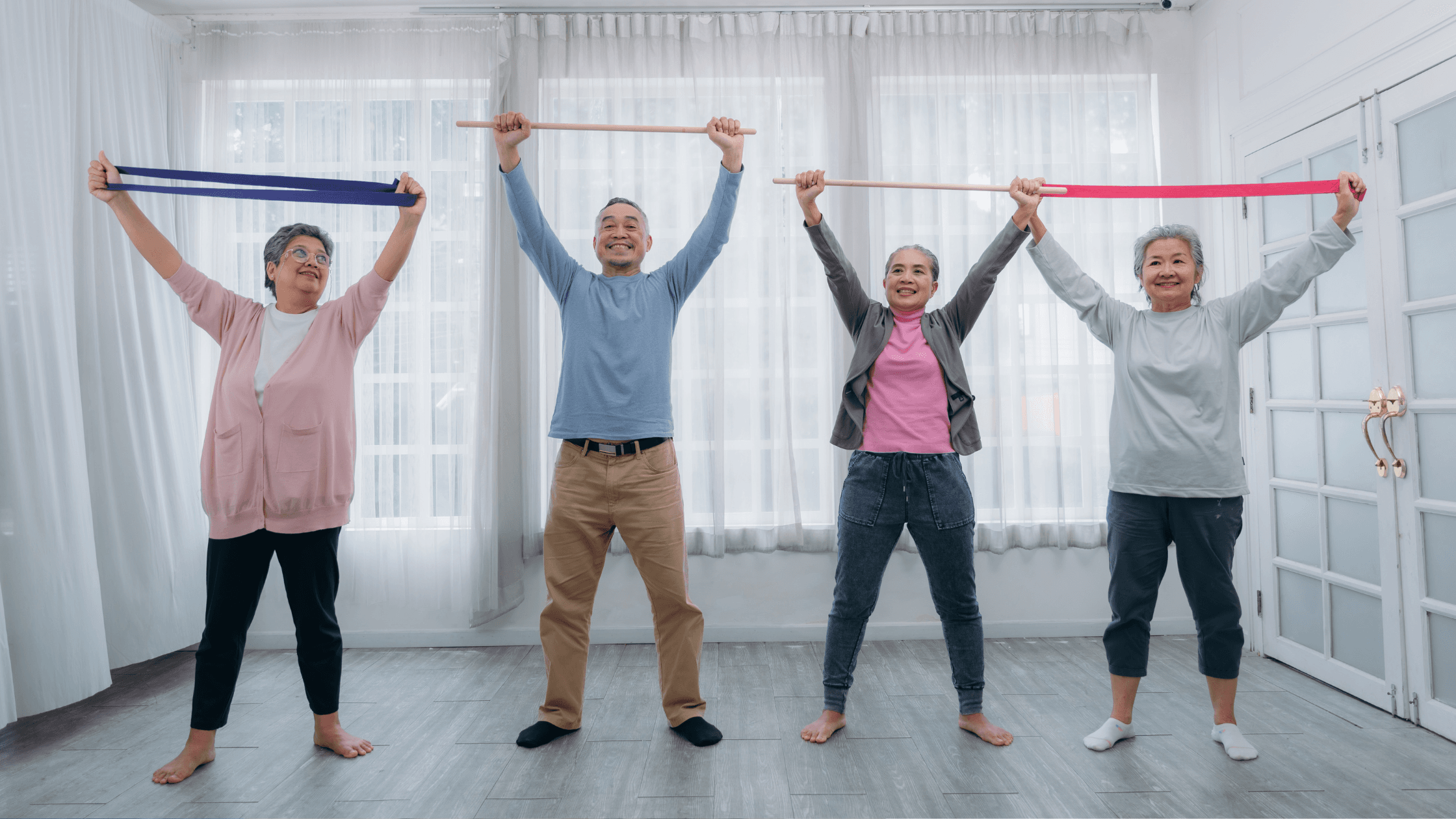
Why Strength and Balance Matter for Daily Life at Home
Weakened muscles and muscle loss in older adults increase the risk of falls, can lead to longer hospital stays, and may mean moving to long-term care sooner1,2. Staying independent relies on both strength and balance. Large muscle groups, such as those in the hips and legs, help with movement, while balance keeps people steady when turning or stepping over objects. Most falls in older adults occur when several factors affect their balance simultaneously3. Losing strength makes even simple tasks tiring, lowers confidence, and speeds up muscle loss because people become less active.
Muscle loss begins around age 30 and accelerates after 60. By age 80, about 40% of the vastus lateralis, a key thigh muscle for balance and fall prevention, is lost1. Yet only 16% of older adults do enough balance exercises, and just 41.7% meet strength-training guidelines4.
What Research Shows about Exercise for Older Adults
This makes research even more important. Strength training is linked to better fitness and a sense of healthy aging in older adults5. Exercise programs that combine resistance training, balance work, and practical movements can greatly improve strength, balance, and daily abilities, even for people in their 80s and 90s6.
Studies worldwide show that exercise can lower fall rates by 23%. Programs that incorporate different types of exercise can reduce the risk of falls by up to 34%, with balance and practical exercises being most effective6. The Canadian 24-Hour Movement Guidelines for older adults recommend7:
Moderate to vigorous aerobic physical activities such that there is an accumulation of at least 150 minutes per week.
Muscle-strengthening activities using major muscle groups at least twice a week.
Physical activities that challenge balance.
Several hours of light physical activities, including standing.
It’s never too late to begin. Starting early helps, but consistent exercise routines can lead to real strength gains, even for frail older adults and those with chronic conditions such as arthritis, diabetes, or heart disease.
Exercises That Make a Difference
The following exercises are based on the Otago Exercise Program8, which has been shown to reduce the risk of falls in older adults9. Aim to do these exercises 3 times per week, aiming for 10 reps each and progressing to 2 sets of 10 reps.
Before starting, please consult your healthcare provider to ensure these exercises are appropriate for you. Perform all exercises within your comfort level, and stop immediately if you experience pain, dizziness, or discomfort.
Sit-to-stand – Stand from a chair without using hands. Use one hand for support if needed at first.
Heel raises – Hold a table and rise onto your toes, then lower.
March in place – Walk in a figure-eight pattern, turning in both directions.
Side leg lifts – Hold a table and lift one leg straight out to the side, adding ankle weights with strength progression.
One-foot balance – Stand on one leg near a table. Start with 10 seconds and build up to 30 seconds.
Heel-to-toe walk – Walk in a straight line for 10 steps with one foot directly in front of the other, holding a table.
How Families Can Support Safe Exercise
Families can help make exercise a regular habit. Remove loose rugs and cords from the floor, add night lights in hallways, choose shoes with good grip, and join in to encourage each other as moving becomes easier.
Watch for warning signs like unsteadiness, avoiding stairs, near-falls, pain, or dizziness. These signs mean it’s time to seek professional advice. Even though the benefits are clear, not many older adults join exercise programs4.
Sources
Want to dig deeper into the research? Here are the key sources referenced in this article:
Osteoporosis Canada – Sarcopenia (2025)
Canadian Frailty Network – Sarcopenia (Muscle Wasting) and Frailty
Public Health Agency of Canada – Surveillance Report on Falls Among Older Adults in Canada (2022)
Public Health Agency of Canada – Strength-training and balance activities in Canada: historical trends and current prevalence (2023)
Aging Clinical and Experimental Research – Strength training is associated with better functional fitness and perceived healthy aging among physically active older adults: a cross-sectional analysis of the Canadian Longitudinal Study on Aging (2019)
Cochrane Library – Exercise for preventing falls in older people living in the community (2019)
Canadian Society for Exercise Physiology – Canadian 24-Hour Movement Guidelines for Adults aged 65 years and older: An Integration of Physical Activity, Sedentary Behaviour, and Sleep
Oxford University Hospitals – OTAGA Strength and Balance Home Exercise Programme Information for patients
Arthritis Research Canada – The Falls Prevention Study